
Model Context Protocol (MCP)
Model context protocol (MCP)
Model Context Protocol (MCP) is a standardized, modular interface designed to orchestrate the interactions between LLM, AI agents, tools, memory, and external systems.
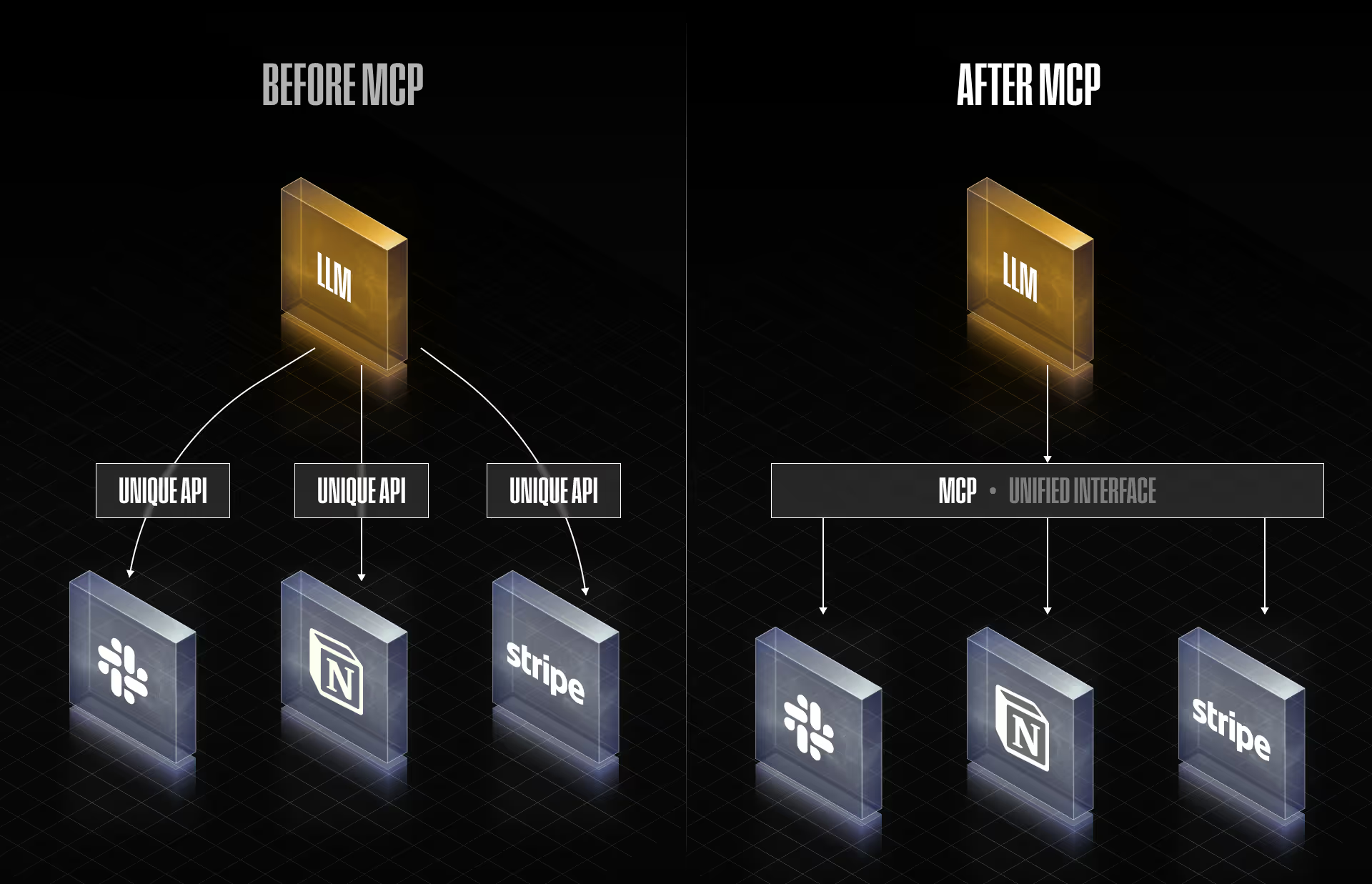
Yet even the most sophisticated models are constrained by their isolation from data—trapped behind information silos and legacy systems. Every new data source requires its own custom implementation, making truly connected systems difficult to scale.
Before Anthropic introduced MCP, AI systems and large language models required bespoke connections to external systems to access information.
Now, developers can use MCP so they no longer need to hard-code each integration. Agents can dynamically discover, access, and use tools with minimal friction, enabling a more flexible, scalable, and interoperable agentic ecosystem.
Why is model context protocol (MCP) important?
MCP acts as the central control system that coordinates decision-making, context handling, and tool execution — essentially, it’s the “brain” managing the AI agent’s runtime behavior.
Model Context Protocol (MCP) client
Model Context Protocol (MCP) client is a component that connects a user’s AI application or interface to the MCP server. It is a lightweight SDK (Software Development Kit) or shim, residing within the host environment like the agentic application or LLM-powered system. It acts as a runtime coordinator to allow AI systems to invoke tools, interact with models, and execute workflows securely and modularly through the MCP server.
Why is MCP client important?
A MCP client abstracts the complexity of the backend and gives developers an easy way to interact with agents or tools via MCP.
Model Context Protocol (MCP) server
Model Context Protocol (MCP) server is the backend service responsible for executing tools and orchestrating agent workflows. It can run locally or on a remote machine and exposes one or more tools through a standardized communication protocol—typically SSE (Server-Sent Events) or Studio. The MCP server handles core responsibilities such as:
- Tool execution (e.g., calling APIs, running code, or querying data)
- Routing requests between clients, agents, and tools
- Prompt orchestration, including input/output formatting
- Context and memory retrieval
- Agent control, enabling dynamic, multi-step decision-making
It serves as the operational core of an agentic system, abstracting complex tool interactions behind a modular, secure interface.
Why is MCP server important?
MCP server is where the core intelligence and orchestration of the AI applications and systems live. All agentic behavior, execution decisions, and context management happen here.
Model Context Protocol (MCP) host
Model Context Protocol (MCP) host is the infrastructure or runtime environment such as a container virtual machine, or serverless function that that deploys and executes the MCP Server. It provides the necessary compute, networking, and execution context to invoke the tool or agentic workflow.
Why is MCP host important?
The MCP host enables scaling, isolation, and deployment of MCP instances. MCP hosts are useful for multi-tenant setups or running different agent configurations.

Secure your agentic AI and AI-native application journey with Straiker
.avif)